What’s the Deal with Cast Iron?
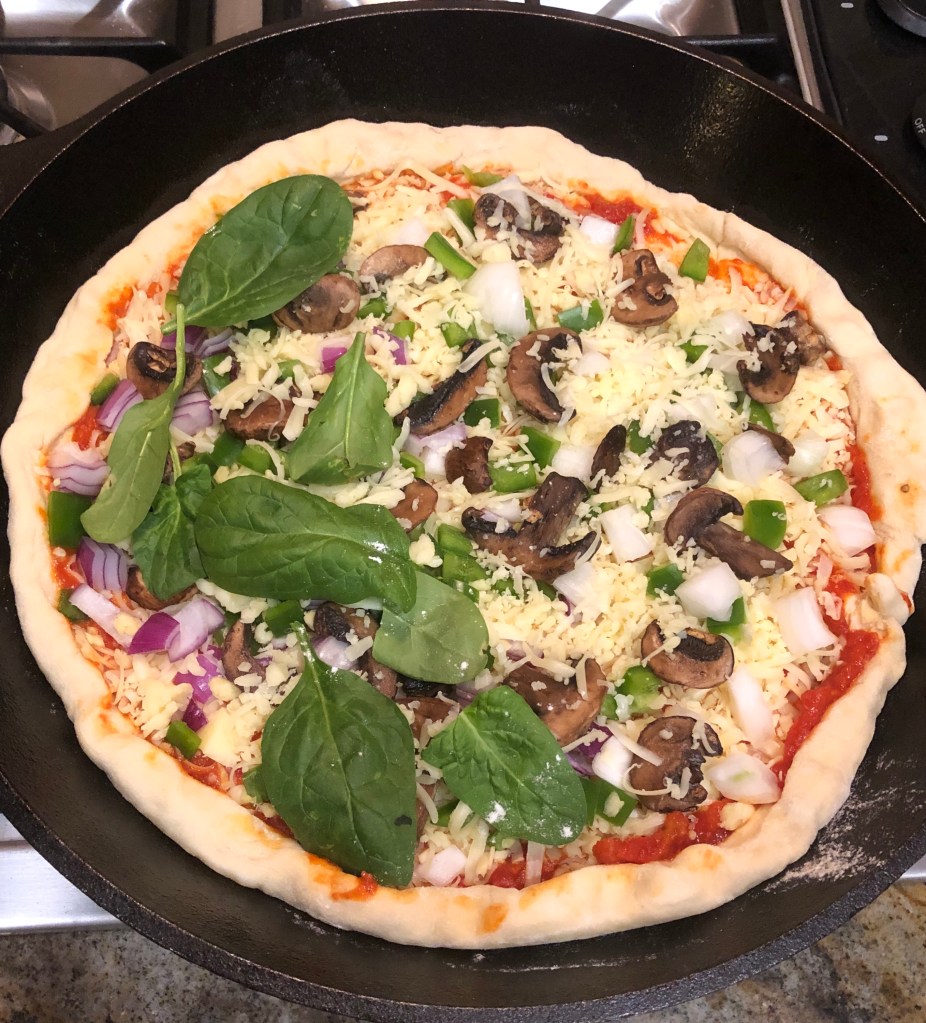
Besides clay cookware, cast iron is one of the oldest cooking vessels in human history. The cast iron cookware dates back to nearly 200 A.D. where it was used as pots in China (Samantha Johnson). It must attest to the attributes of cast iron cookware that it is still widely used today. The use of cast iron did decline in use with the introduction of stainless steel and nonstick cookware, but its strengths over these other cookware options has caused a spike in popularity of cast iron. The fact that it is one solid piece of iron instead of layered metals and coating like stainless steel and nonstick pans use means its extremely durable and its lifespan will far outlive the competitors. Another great benefit to the cast iron is it’s ability to retain heat. While thinner pans heat faster they also lose that heat faster as well. Since cast iron holds and retains the heat it makes dishes like pizza or baked goods especially easy. Also when you want to sear a steak you can let the pan come to temperature in the oven then used the retained heat to get a steakhouse quality result. The ability that truly sets cast iron apart from the pack is it’s ability to be seasoned. This creates a nonstick like coating in the pan without having to use potentially toxic materials like Teflon.

Using Cast Iron
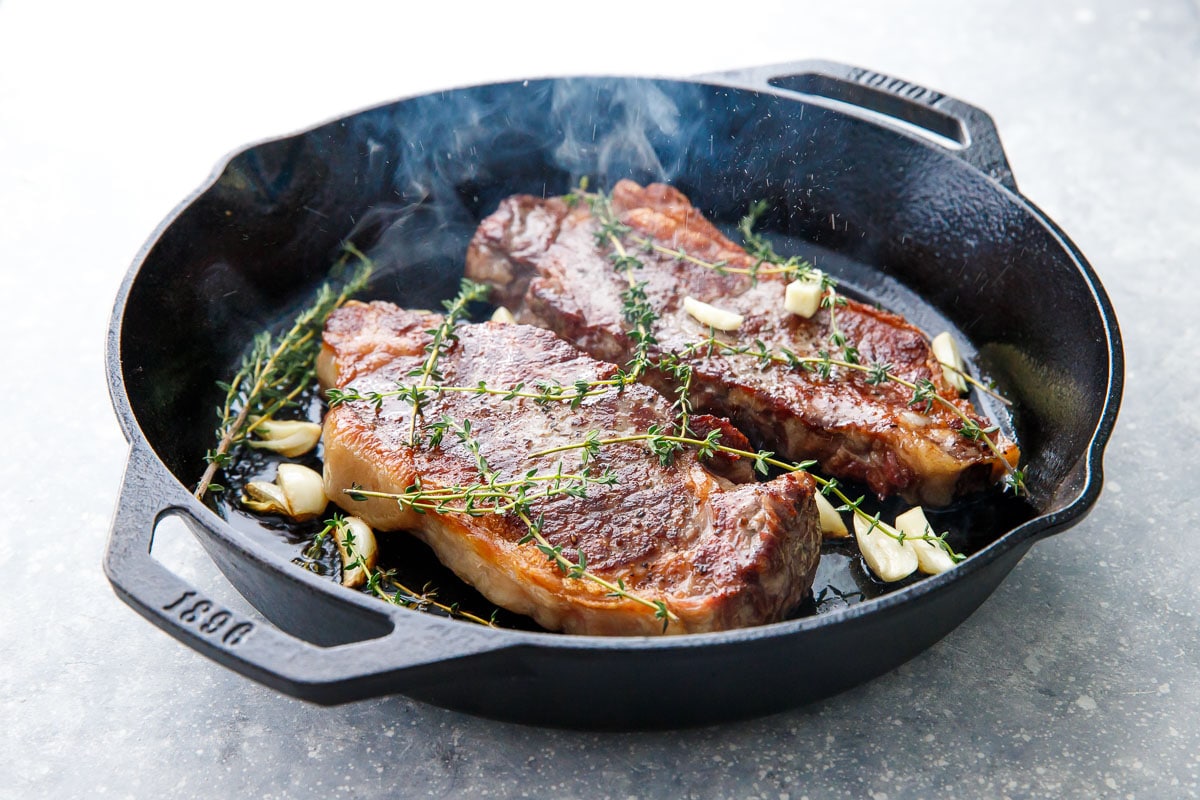
My absolute favorite thing to use my cast iron pan for is to sear steaks. I use the sous vide reverse-sear method to get the best results out of any cut. Step one is to season and vacuum seal your steak with some fresh herbs like rosemary or thyme. Then, let the steaks cook in the water bath being heated by the sous vide for around 3 hours. Using a sous vide will onyl cook the steaks to the temperature you set it at and no further. I like a medium-rare steak so I mine for 130 degrees (the temp will rise to that perfect 135 when you sear it). So after the water bath the steaks are done all the way through perfectly but they look grey and inedible. The best way to fix this is with a ripping hot cast iron. Set the steaks too the side on paper towels so they will dry. This is essential in order to get that nice brown and crispy crust. In the last hour of the water bath let put your cast iron in the oven at the hottest temperature it will reach. Then transfer the pan to the range and set it on max heat. Next, put some high smoke temperature oil (avocado, ghee, canola, etc.) in the pan and throw the steaks in. They will sear very quickly so you’ll only need to sear the first side for 1-2 minutes. Now you flip the steak and cut the heat. Let this side sear for 1-2 minutes then add a table spoon of butter, a couple cloves of crushed garlic, and thyme to the pan. Spoon the pooling butter over the top of the steak for around 1 minute. Take the steak out of the pan let them rest under aluminum foil with a fresh pad of butter and the garlic on top. Voila, you have a steak that is comparable if not better than the Steakhouses and their fancy 1000 degree broilers. All it took was a sous vide or oven and a cast iron pan that could be had for ~$35.
How to Care for Cast Iron
Okay, this part can be a bit tricky and scares people away from cast iron, but the process is pretty simple. When you get your new cast iron they normally come “pre-seasoned” but this seasoning is only to protect it from rusting after it leaves the factory. It’s not going to have that Teflon-like non-stick surface just yet, but with a little elbow grease we can get there. First, you want to strip the pre-seasoning from the pan by cleaning with some dish soap and a Brillo pad. Next, put it on the range on a medium heat and let it dry completely. Now spread a thin layer of a low smoke point oil (flaxseed, grapeseed, vegetable, etc.) over the entire pan, handle and bottom included. Wipe out any excess oil and place in a preheated oven at 450 degrees. Let the pan bake for an hour then remove the pan and let cool completely. Repeat this process 1-2 more times and then you will have a nice shiny Teflon-like non-stick coating covering your entire pan. After you complete the process it’s important you do not use soap or harsh tools in your pan because these will damage the seasoning you just worked so hard to get. To clean all you need to do is rinse, scrape any food with a wood or plastic utensil, then dry completely. It’s not such an intimidating process after all.
Sources
Johnson, Samantha. “A Brief History of Cast Iron Cookware.” Hobby Farms, 28 Aug. 2018, http://www.hobbyfarms.com/a-brief-history-of-cast-iron-cookware-3/.
 A Home Cook's Tour