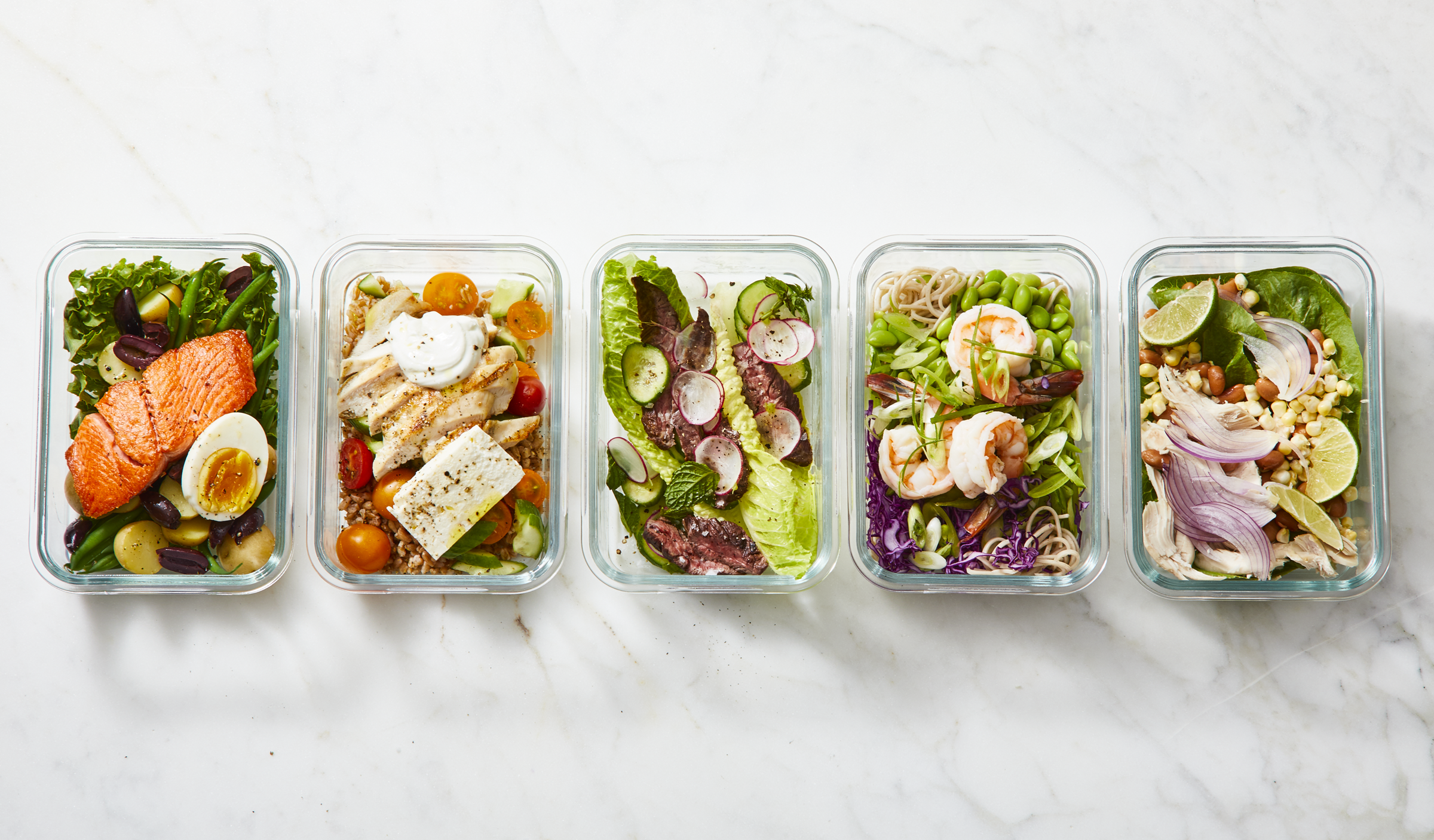
The idea of meal prepping is as simple as the name implies. It includes cooking enough food to be packaged and refrigerated/frozen in order to be eaten throughout the week or month. The most common form of meal prep is making dinner and/or lunches for the work week. The benefits of this include; saving time by not having to cook every day, saving money, and being healthier. The main disadvantage of meal prepping is the fact that you will eat some of the same food multiple times during the week. It is possible to prep different meals but that reduces the money and time you save by buying and cooking in bulk. The only special tool you need in order to meal prep is containers. You’ve likely seen or have the plastic Tupperware containers the range in a variety sizes and while these are great for saving leftovers, they are not the best for meal prepping. If you give meal prep containers a search on Amazon, you will see two main distinctions between the results. You will see the plastic meal prep containers that on average come with 20 containers for $15. The other common product you will find is the glass meal prep containers. These on average will cost $20 for a set of 5. The benefit of the glass containers is that they have snap on lids with seals so you can confidently store soups or stews in them. With them being glass you can also reheat your food in the oven instead of just the microwave like you’d have to do with the plastic ones. Not to mention the smells and stains the plastic containers take on can be somewhat unpleasant. You will find that both the plastic and glass containers are similar sizes and they both come in a 1, 2, or 3 compartment variety. So my recommendation would be to spend $40 in order to 10 glass containers and get them in the 1 compartment because a lot of meal prep recipes consist of burrito bowls, soups, and rice based dishes. So now that you have your equipment you need to know what to make. Generally, if you search “meal prep recipes” on google you will find some variation of a protein, grain, and vegetable with minimal flavor or seasoning. My personal technique is to make whatever recipe piques your interest but make it in bulk then package it, store it, then eat it throughout the week. I have found that storing 5 days’ worth of food solely in the fridge can lead to days 4 and 5 tasting a bit off. So, I put the next days food in the fridge and days 2 through 5 in the freezer then replace one the one from the fridge with one from the freezer. With this strategy your food stays fresh in the freezer and thaws for 24 hours in the fridge making it easier to reheat. With these tools and tips, you are ready to embark on your meal prep journey! Happy Meal Prepping!
 A Home Cook's Tour